
Violence, Culture, and the Narrative We Choose

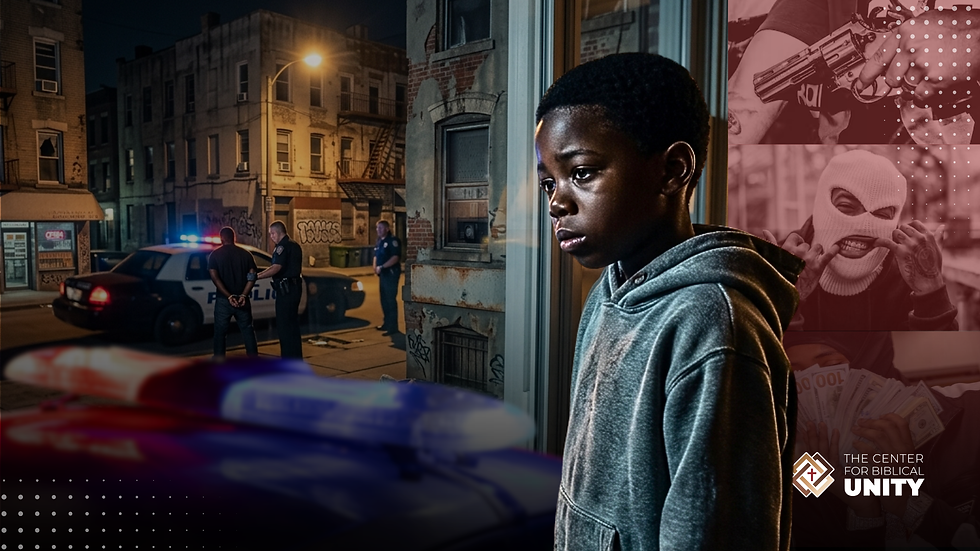
I’ve been involved in several discussions recently about whether the perception of crime and violence in the black community is real or simply an invention of white supremacists designed to make Black people look bad.
According to FBI data, black Americans account for a disproportionately large share of homicide victims and perpetrators relative to their percentage of the population. I’ve encountered some black people who simply don’t believe this is true. They don’t necessarily have evidence to demonstrate that the data is wrong. They simply refuse to believe it. Their position is rooted in a narrative rather than in facts.
The narrative they live in tells them that white people have always fabricated stories to portray black people as violent. They believe it is all part of a conspiracy against black people, designed to feed the prison-industrial complex and prevent black people from prospering. Once someone accepts that narrative, new information is interpreted through that filter. If the news is negative or portrays black people in a negative light, it is automatically dismissed as propaganda.
I want to share a little about my own experience growing up in the black inner city during the 80s, 90s, and 2000s. This was the height of the crack and gang epidemics, as well as the emergence of gangsta rap. The Black community is not defined entirely by violence. Most people are not violent, and many of the problems are concentrated among a relatively small but highly destructive minority. But that does not mean the problem is insignificant.

(Me and my big sister circa 1987 or 88)
Here is a rundown of some of the violence I experienced growing up.
If you have read Elijah Anderson’s Code of the Street, you know that he describes two broad types of families within the inner city: “decent” families and “street” families. I came from what Anderson would describe as a “decent” family. I wasn’t allowed to roam the streets, and my parents worked hard to protect me from the worst elements of our neighborhood. Yet I still experienced a tremendous amount of violence.
I can only imagine the stories that the “street” families could tell.
When I was about four years old, I witnessed my uncle nearly beat my grandmother to death. He was a drug addict, and he knew it was the first of the month and that my grandmother had received her check. She refused to give him the money, so he beat her until she was almost unrecognizable.
By the grace of God, I don’t have any real memories of the incident, but another cousin and I were present. My mother later told me that she went looking for my uncle and was actually glad she couldn’t find him because she intended to kill him.
My grandmother was a strong Christian woman, and family and forgiveness were extremely important to her. Holding grudges and refusing to forgive were not acceptable in our family. She forgave my uncle and encouraged the rest of the family to do the same. After a short stint in jail and getting clean, he was welcomed back into the family.

(My grandmother, Francis Jones)
Unfortunately, my uncle spent the next 30 years in and out of prison for drug-related and other minor crimes. He is currently serving a life sentence for manslaughter. He was getting high with a woman in a hotel room when she overdosed. Instead of calling 911, he hid her body. She wasn’t discovered until the smell coming from the room became overwhelming.
Even though he is in prison, my mother and aunts still make sure he is taken care of. They put money on his books so that he can purchase necessities and have phone privileges.
When I was in sixth grade, I had a classmate who was murdered. She was babysitting in the projects when a 15-year-old boy shot her in the head because she rejected his sexual advances.
She was 12 years old.
Also in sixth grade, a group of young kids found a woman lying naked on our school’s baseball field. She had been raped, beaten, and dumped there. I still remember the helicopter arriving to airlift her to the hospital.
That same year, I was threatened with a gun by an older neighbor who was angry because I had embarrassed him in front of his friends. He pulled up his shirt and showed me the gun tucked into his waistband. He said, “Say something now.” I pretended not to be intimidated. I acted as though I wasn’t scared. One of the keys to surviving in the hood is to not show fear or weakness. However, as soon as he left, I ran into the house as fast as I could.
During this period, I lived down the street from two housing projects affectionately known as Lil Vietnam and Lil Korea. They were given those names because they were essentially war zones. It seemed like almost every night I could count on hearing sirens and seeing red and blue lights flashing past my bedroom window.
It was so dangerous that first responders would not enter either neighborhood unless the police went in first.
In seventh and eighth grade, I remember multiple gang fights breaking out after school that eventually led to gunfire. I remember one girl being killed by a stray bullet. She wasn’t the target. She was simply in the wrong place at the wrong time.

During the summer after eighth grade, I remember what were known at the time as the “Jump Out Boys.” They were a tactical SWAT team that drove around the neighborhood in an unmarked van. They would randomly jump out, force occupants out of vehicles, and make arrests. They also conducted raids on drug houses.
Sometimes they would make a show of force by riding through the neighborhood with the back doors of the van open and their weapons visible.
Ironically, that was the first time I remember the neighborhood being quiet.
There were no gunshots.
In ninth grade, I was bused to a school about 45 minutes from my house. This school was made up of kids from two different communities. I’m pretty sure the school was structured that way because of desegregation policies. On one side were kids from the inner city. On the other were kids from the suburbs.
Many of the kids from the inner city were street kids. Some of the suburban kids, meanwhile, had listened to too much rap music and thought they could handle themselves against the street kids.
The rivalry initially consisted of fights in the hallways. Eventually, however, it escalated to the point where a star freshman football player was killed when the car he was riding in was shot up by street kids from my neighborhood. He also wasn’t the intended target.
That incident essentially ended the rivalry.
It had gone too far.
In 2005, my childhood best friend was murdered in his car. He sold drugs and lived that lifestyle. Earlier that day, he had gotten into a confrontation with some men at a gas station and pulled a gun on them before leaving.
They waited until that night, when they knew where he parked and sold drugs. They shot up his car and killed him.
At his funeral, I learned that he had been responsible for a recent murder that had been reported in the news. Apparently, the man he killed had attempted to rob and kill another friend of ours during a drug deal.
After the funeral, I was so angry that I went home and threw all of my rap CDs in the trash.
I could no longer support what I believed was poisoning our community and influencing young men and women to live destructive lives.
At the funeral, they had my friend’s face printed on T-shirts. He was pictured with a gold grill in his mouth, flashing stacks of money. They were celebrating the image and lifestyle he had embraced.
But that lifestyle was ultimately what got him killed.
After the funeral, we all went back to a mutual friend’s house. The first thing they did was pull out bags of weed and begin rolling blunts. Before long, people were arguing over who owed whom money.
At that point, I decided it was best for me to leave.
That was the last year I lived in the hood.
A few years ago, my cousin was shot eight times while sitting in his car with an AK-47. Thank God none of his injuries were life-threatening, but one bullet shattered his femur and another badly mangled his hand. He had a long road of rehabilitation ahead of him. Thankfully he’s doing well today.
I’m sharing all of this simply to lay out my experience with violence in the black community. I want people to understand what it means for violence to become normalized.
I remember being in high school and talking on the phone with a girl who lived in a suburban neighborhood. While we were talking, she asked me if the noise she heard in the background was gunfire.
I had to stop and think about it.
To me, it was normal background noise.
I confirmed that they were gunshots, but I told her not to worry because they weren’t close. I estimated that they were probably about two streets away.
Looking back, I understand how crazy that must have sounded to her.
But to me, it was normal.
Violence was normal. The threat of violence was normal. Hearing gunshots was normal.
That is why so many of us worked to get out of the inner city. Our teachers would tell us to stay in school and get an education so that we wouldn’t be trapped in those neighborhoods.
Many of us followed that path. We left the inner city because we wanted something better for ourselves and, ultimately, for our children.
Unfortunately, moving away did not completely protect our children from the cultural influences we grew up around.
Many Black children who grow up far removed from the violence of the inner city are still drawn toward the culture and lifestyle through music, movies, social media, and the pressure to identify with “the struggle.”
This is why I push back against narratives that portray systemic racism and white supremacy as the primary obstacles to Black success and achievement.
Those things can certainly be discussed and debated, but they cannot explain everything.
We also have to be willing to talk about culture.

And not simply the culture that exists in our communities, but the culture that we sometimes celebrate, defend, and export even after we have escaped the environments that produced it.
I have experienced this firsthand.
The solution is not simply majority-Black voting districts or DEI initiatives. Government programs and political solutions cannot transform the human heart.
The solution is for black Americans to experience the transformation that comes through the renewal of the mind by the power of the gospel.
It means returning to the principles and values that characterized many of our grandparents and great-grandparents. It means restoring faithful gospel preaching in our churches and holding one another accountable to God’s standard of righteousness.
It means restoring our homes so that children are raised by loving mothers and fathers who teach them to love and follow Jesus.
It means restoring hope and faith in God rather than placing our ultimate hope in government.
I have seen what violence can do to individuals, families, and communities. I have seen what happens when destructive behavior becomes normalized and when an entire culture begins to celebrate the very things that are destroying it.
We cannot fix what we refuse to acknowledge.
And we cannot overcome what we are unwilling to confront.
If we want something different for the next generation, we have to be willing to tell the truth about where we are, how we got here, and what needs to change.
For me, that begins with the gospel.


